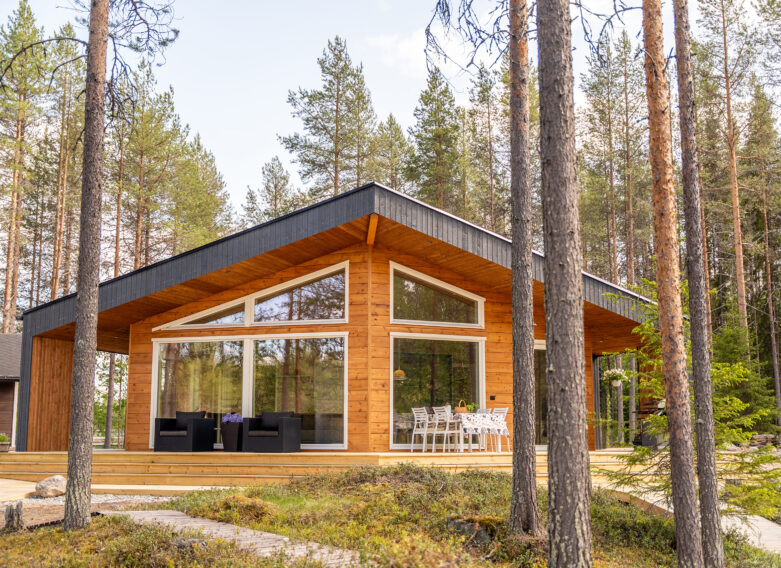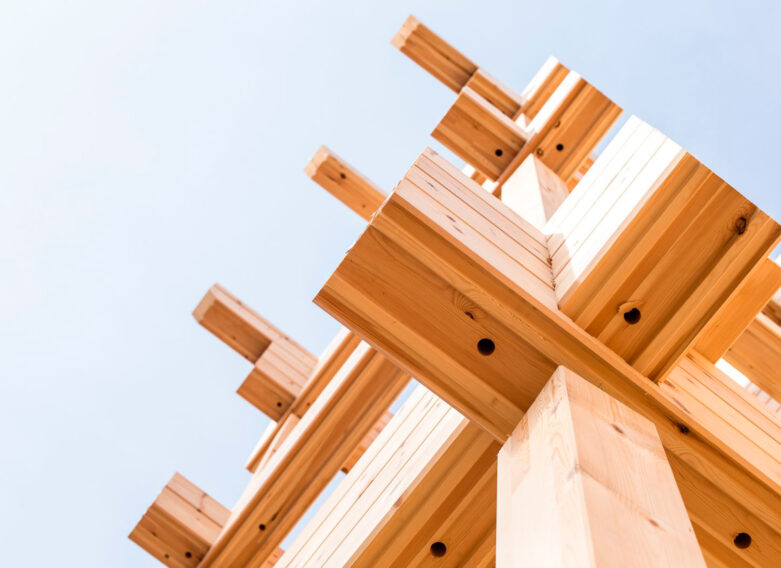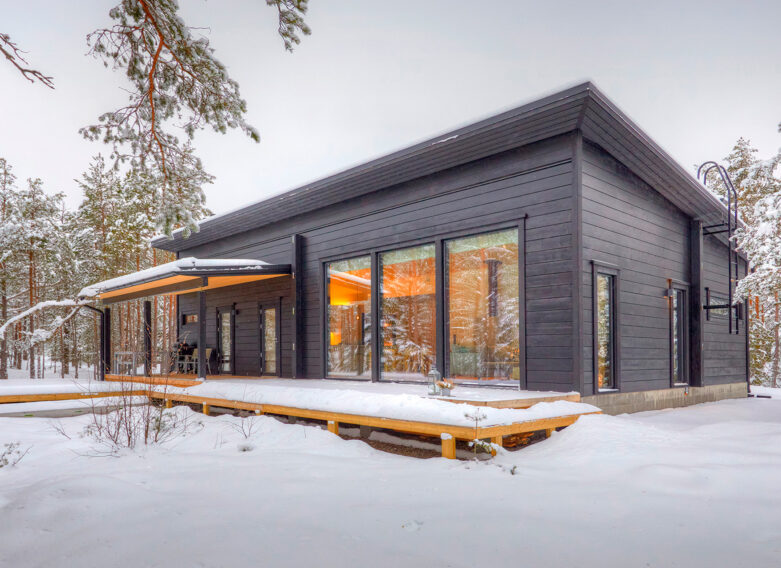
Annual maintenance of log houses and log cabins is an important part of ensuring the building’s longevity, healthiness and value retention. Although a log house is, in principle, a low-maintenance and durable form of housing, like other buildings it requires regular inspections and proactive maintenance.
Summary
This article explains what is involved in the annual maintenance of a log house, what log settling means, and what aspects of log house maintenance you should pay attention to during different seasons. It also includes insights into how modern log solutions, such as the non-settling LHX log, affect maintenance requirements.
Log construction is, by its very nature, a long-lasting structural solution: if properly maintained, it can remain serviceable for up to 500 years. Regular maintenance makes the use of a log house safer, more manageable and, in the long term, also more cost-effective, as it prevents unpleasant surprises from arising.
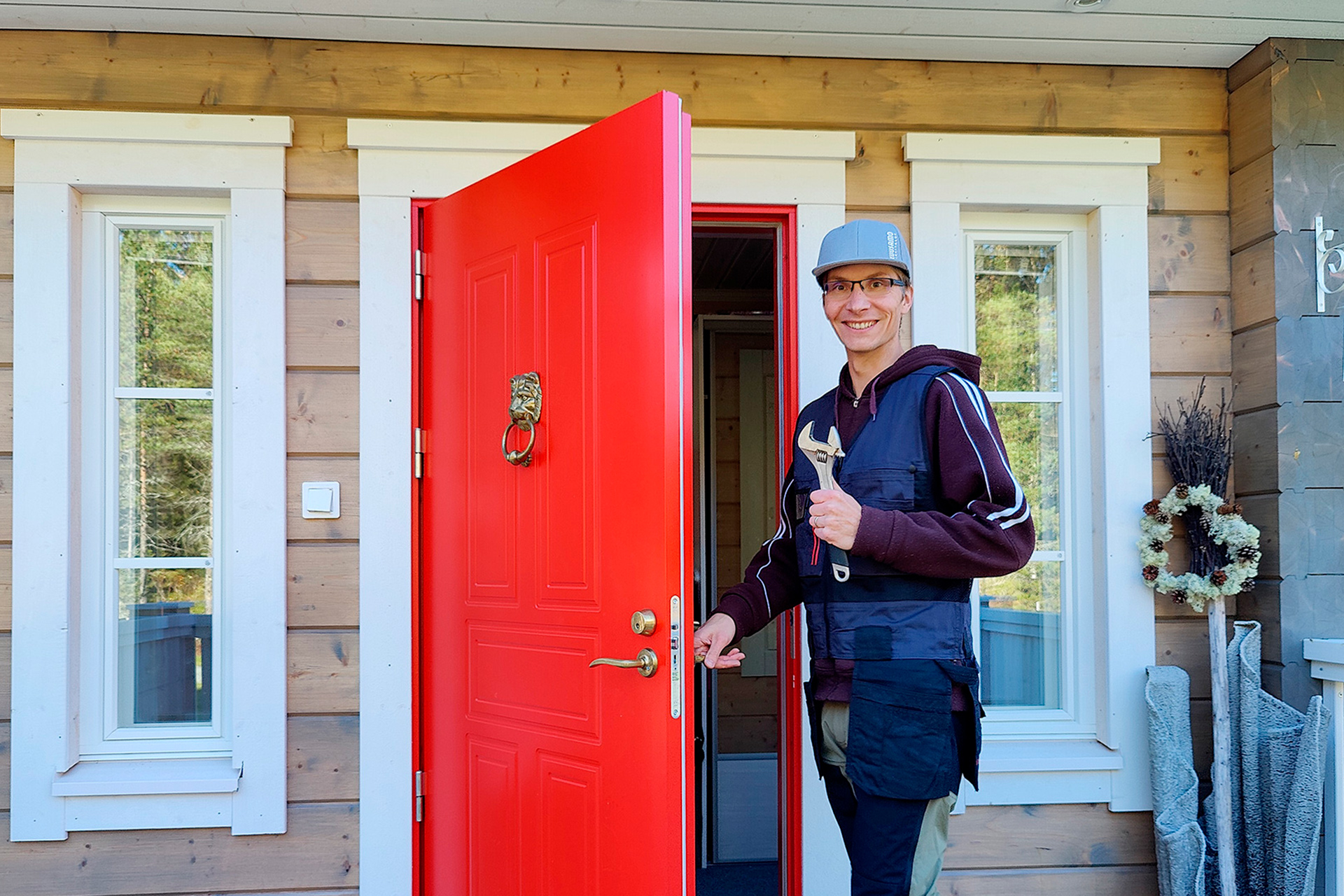
– You can think of log house maintenance in the same way as any other item requiring regular maintenance, such as a car, a bicycle or even a pair of skis: if well looked after, they will bring joy to their users for a long time, sums up Janne Kivilahti, structural designer at Kuusamo Log Houses .
The maintenance principles for a log building are the same regardless of whether it is a detached log house or a holiday home. The size of the building and the amount of technical systems may affect the number of maintenance points, but the material itself and its requirements remain the same.
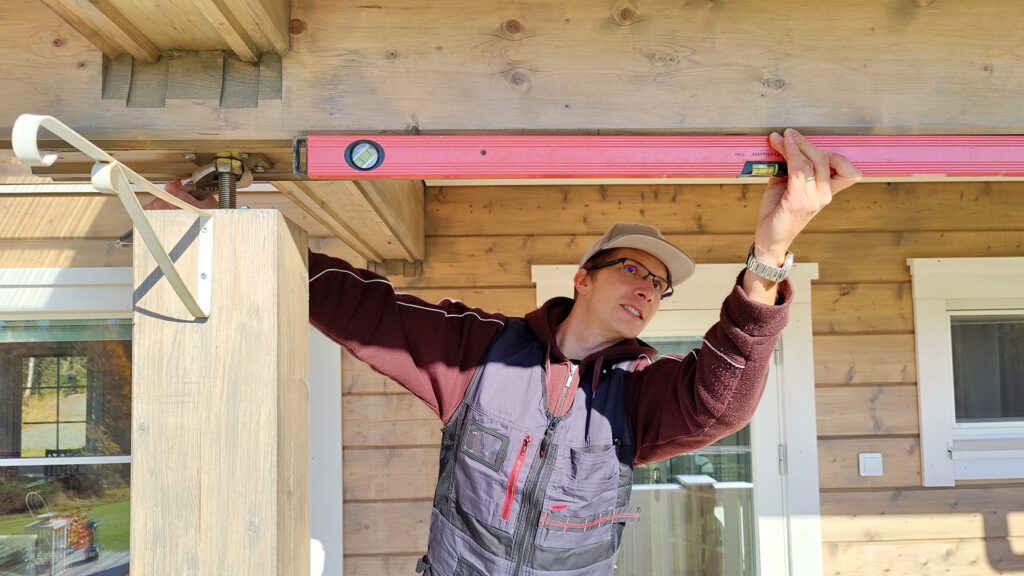
What does annual maintenance of a log house involve?
The maintenance of a log house is largely based on the same basic principles as the maintenance of other detached houses. It is often sufficient to inspect the house regularly and address any issues in good time.
In particular, the following factors have a direct impact on both the durability of log structures and the building’s long-term health:
- moisture control: excessive moisture is the single greatest stress factor for log structures.
- effective ventilation helps keep structures dry and ensures good indoor air quality.
- condition of the roof and rainwater systems: water entering structures unchecked causes damage most rapidly.
- Regular visual inspection of structures: any changes or anomalies are detected in good time.
Settlement of log structures – what is it all about?
Log construction has one significant characteristic: the natural movement of the wood and possible settling.
Laminated logs made from solid timber are a living material. After construction, the logs dry out and stabilise their moisture content, which can cause the wall structure to shrink vertically, i.e. settle.
Important information about the settling of log structures:
- Most of the settling occurs during the first 1–2 years.
- Minor movement may still occur even after this, particularly in varying weather and humidity conditions.
- Settlement is not a defect, but a natural property of wood.
Provisions for settlement are made as early as the design stage of a log house through structural solutions implemented during construction. These include, amongst others, adjustment allowances, sliding fasteners and screw-in footings.
If settlement is observed during use, the situation is first assessed as a whole: the operation of doors and windows, the straightness of the structures and any changes in gaps are checked. If necessary, settlement can be managed by adjusting, for example, screw jacks or other designated adjustment points.
– It is essential not to react to settlement in haste. When adjustments are made thoughtfully and in accordance with the plan, settlement remains under control and does not cause damage, Kivilahti emphasises.
Non-settling logs (LHX) facilitate maintenance
Kuusamo Log Houses has developed log construction to meet the needs of modern living. One example of this is the non-settling laminated log, LHX.
– Thanks to the non-settling log, the building does not require settlement monitoring or related adjustments. This makes things particularly easier in the early years of the building’s life and allows for greater freedom in architecture, explains Kivilahti.
Advantages of the non-settling log:
- The building does not require settlement monitoring or adjustment.
- Allows for larger window areas and modern architecture.
- Facilitates maintenance and reduces the need for inspections in the early years.
Non-settling logs do not mean that the building does not require maintenance, but measures related to settlement are no longer necessary.
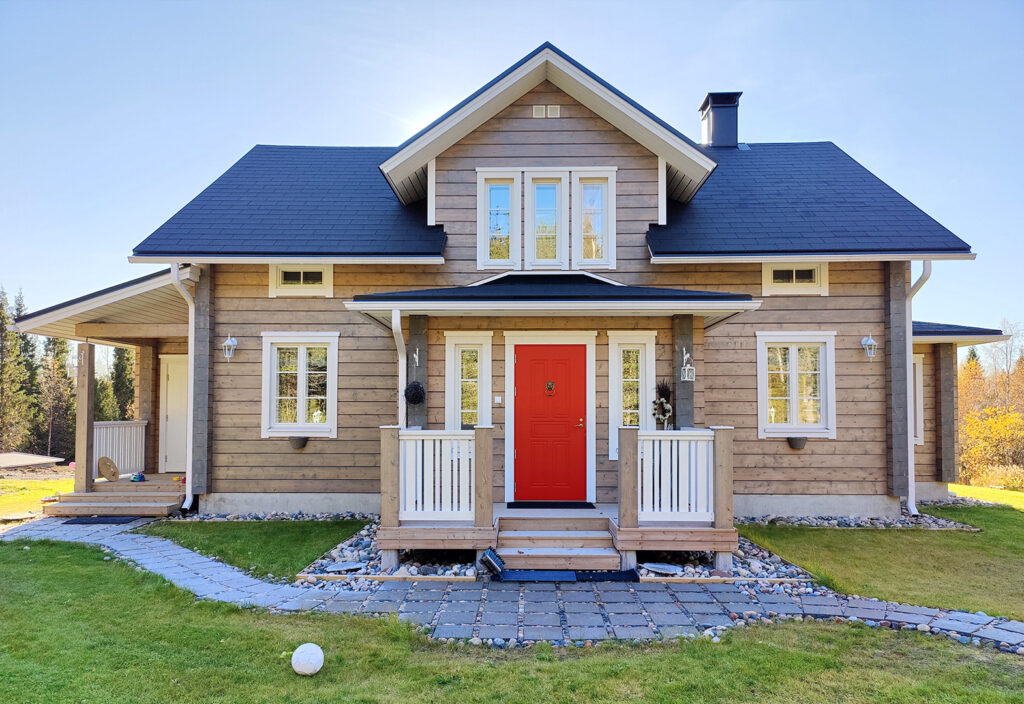
Annual maintenance of a log house in different seasons
Structural designer Janne Kivilahti recommends scheduling maintenance tasks according to the seasons.
Spring
- check the condition of the roof and penetrations
- clean the rainwater gutters and downpipes
- ensure the plinth and subfloor are well ventilated
Summer
- check the condition of log surfaces and whether they need surface treatment
- ensure rainwater is channelled away and the yard is sloped
- check the terrace structures
Autumn
- replace the filters in the ventilation unit
- check the seals on doors and windows
- prepare the building for the winter season
Winter
- monitor snow load on the roof
- ensure that ventilation openings do not become blocked
- monitor indoor humidity levels
The maintenance log supports proactive maintenance
The maintenance log is an excellent tool for log house owners. When maintenance tasks are recorded, everything stays under control and any necessary changes are spotted in good time.
It is worth noting the following in the maintenance log:
- inspections and maintenance tasks carried out
- dates
- any observations and follow-up actions
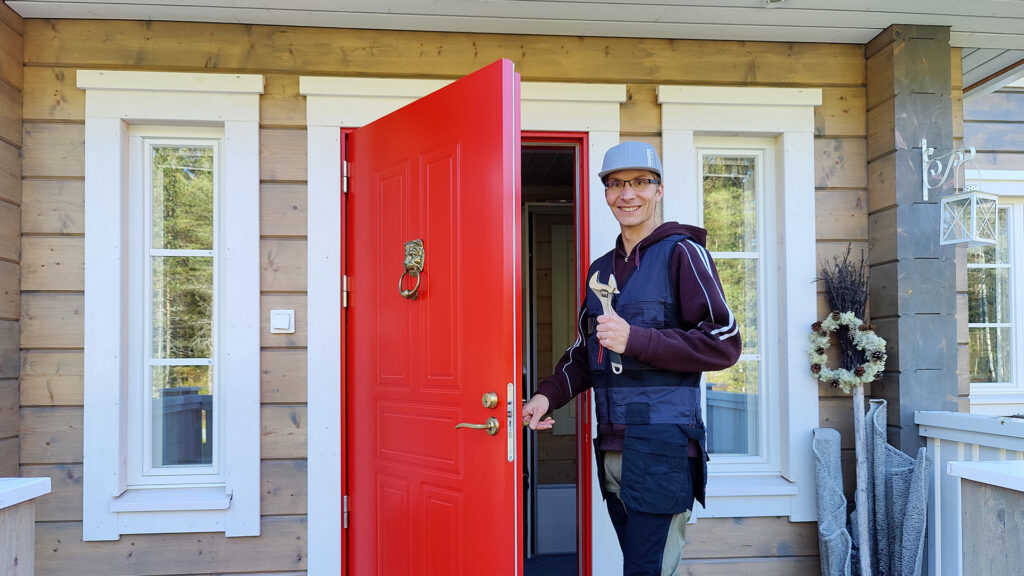
The 10 most important inspection points for the annual maintenance of a log house
It is advisable to organise the annual maintenance of a log house into clear categories. Below are ten key areas that should be checked regularly: some annually, some less frequently, but always proactively. The items to be checked are based on the functioning of the log structure, moisture control and where problems most commonly arise in practice.
1. Settlement of log structures
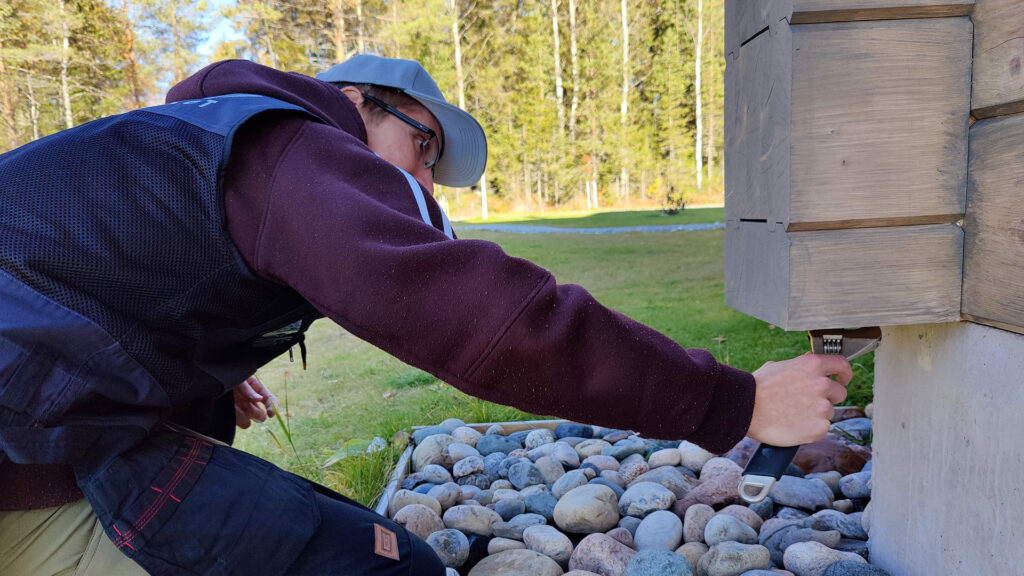
Settlement of log structures is a common and well-known phenomenon that must be taken into account in the design and planning of a log house, as well as during the building’s use and maintenance. Settlement is caused by the natural drying of the timber and changes in moisture balance during the early stages of the building’s life cycle.
Settlement is not a deviation or a fault, but a characteristic for which log structures are designed. When settlement is properly understood and anticipated in advance, it does not cause problems for the building’s functionality or habitability.
The following figures can be used as indicative values for settlement per metre of wall height.
- Round logs: 30–60 mm/m
- Planed logs: 20–40 mm/m
- Laminated log: 10–30 mm/m
Settlement mainly occurs during the first two years. For this reason, it is advisable to check the settlement allowances of structures and building components:
- Tension of corner bolts and other bolts.
- Settlement allowances for columns, lightweight walls and masonry walls.
- The clearance for movement and settlement at the junction between the ceiling and the wall, as well as for stairs and handrails.
- Sliding and settlement allowances for fittings and additional insulation walls.
- Settlement allowances and opening of doors and windows.
- Sliding at the eaves and at the base of the chimney.
- Uniform settlement of the log frame.
Remember to clarify and check with the site supervisor the structures to be adjusted and the location of the adjustment legs placed in them. The general principle is that structures must be horizontal. When adjusting structures, adjustments must be made gradually between the adjustment legs on a ‘one turn at a time’ basis, so that the loads are distributed evenly across the structures being adjusted.
The settlement of a log house must be monitored, and the necessary adjustments and tightening of bolts must be carried out regularly. Any problems must be rectified immediately upon their occurrence. Remember also to check the seal between the drip cap and the log and replace it if necessary.
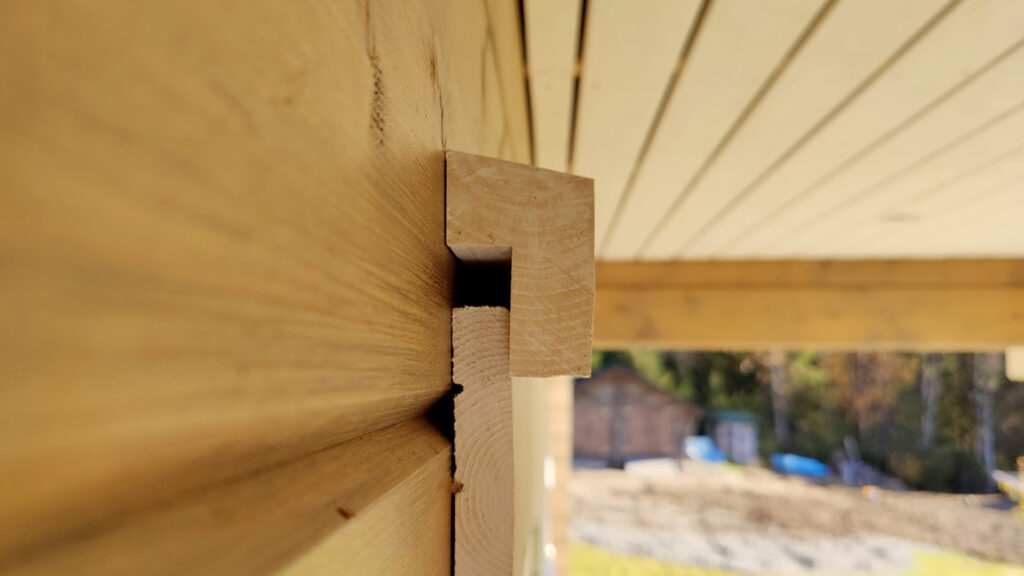
2. The non-settling log option: LHX
Kuusamo Log Houses’ range also includes a non-settling log option. With non-settling logs (LHX) , log construction is simpler and also faster, as there is no need to take traditional settling materials into account or install adjustment legs. LHX enables a more modern architectural style and the narrower window and external door cover strips typical of a contemporary look.
Non-settling logs require no subsequent adjustments. Furthermore, the LHX log option can be more easily combined with other building materials, such as glass and stone. The joints between the logs and other structures are even tighter than before.
Non-settling LHX logs are available in three thicknesses: 135, 202 and 268 millimetres, and are available in pine and spruce. Find out more about the non-settling log here.
3. Roofing
The condition and performance of the roof covering should be checked regularly. Particular attention should be paid to the tightness and watertightness of the penetrations. Any debris that may have accumulated on the roof should be removed. The roof should also be washed every few years. However, when washing the roof, care must be taken not to damage the roof covering. The condition of the underlay and any sealing strips on the ridge must also be checked, and any damaged areas repaired.
- Check the condition of the roof covering at least once a year.
- Check the roof structures for slippage regularly during the first few years, particularly around the chimneys.
- Remove any debris and leaves that have accumulated on the roof and in the gutters.
- It is also a good idea to wash the roof every few years.
- In winter, the accumulation of snow should be monitored.
4. Attic
Adequate ventilation of the loft and any leaks in the roof should be checked regularly, and any damage repaired without delay.
The following should be checked in the roof space:
- the openness of ventilation channels
- that the insulation is dry and remains in place
- any signs of damp, discolouration and unusual odours.
Ventilation valves and vent caps relating to the roof space must be kept open throughout the year. It is also advisable to ensure that no damp indoor air from the rooms passes through the vapour barrier into the loft, as this can cause moisture to accumulate in the insulation. In addition, it is advisable to check that no harmful condensation occurs in the pipes and ventilation ducts running through the roof space.
5. Ground floor
The ground floor and plinth area are susceptible to ground moisture. The condition of the ground floor directly affects the indoor air quality and health of the building. Moisture problems in the ground floor should always be taken seriously and their cause investigated. If any damage is detected, it must be repaired without delay.
When maintaining and inspecting the subfloor, particular attention should be paid to:
- the openness and unobstructed nature of ventilation openings
- water absorption from the roof and gutters: it must not seep into the foundations or place a load on the lowest logs of the wall structures.
- any signs of damp, mould or odours
- the ground slopes away from the building
- plants planted too close to the building’s foundations or walls must be removed.
In houses with raised floor structures, it is advisable to inspect the condition of the subfloor visually in the crawl space once a year.
In truss-floor structures with a solid plinth the crawl space must be effectively ventilated – particularly during the summer. In late summer, the humidity in the crawl space may temporarily rise above normal levels as the moisture in the outside air carried in by the ventilation condenses in the cooler crawl space.
Once the winter season begins, the ventilation hatches should be closed to prevent frost damage to the foundations and to avoid the floor structure becoming excessively cold. Remember to reopen the hatches in the spring once the frost season has ended.
6. Rainwater drainage system
The purpose of the rainwater drainage system is to direct water from the roof and yard areas away from the building’s foundations in a controlled manner. A malfunctioning rainwater drainage system is one of the most common causes of damp problems.
Annual maintenance of the rainwater drainage system should include:
- clean the rainwater gutters and downpipes
- clean and, if necessary, flush the wells and pipework connected to the rainwater drainage system
- ensure that water is channelled sufficiently far away from the building’s base
- check the condition of the gutters and downpipes, as well as their fixings and joints
- checks the discharge points of the rainwater and drainage systems.
7. Drainage pipes
The purpose of drainage pipes is to prevent soil moisture from entering the foundations. Although drainage pipes are not visible, their functionality can be monitored.
The inspection covers:
- drainage inspection chambers and water level
- ground moisture around the plinth
- any signs of moisture in the foundations.
During the first year, sludge can easily accumulate in the drainage system, which in the worst case can block the pipes and prevent them from functioning. The drainage system must be maintained by cleaning the inspection chambers of any debris that may have accumulated in them. If necessary, the pipes are flushed with pressurised water to remove silt and debris.
If you suspect that the drainage system is not working properly, you should have it checked by a professional.
8. Surface treatment of external walls
It is advisable to monitor the condition of the exterior cladding, particularly on the south-facing walls of the building. The surface treatment of log walls protects the wood from moisture, UV radiation and dirt. The condition of the surface treatment directly affects the preservation of the logs.
Maintenance treatment should be carried out as soon as the condition of the surfaces requires it.
- Check for even settling twice a year.
- Make any necessary adjustments in accordance with the principles outlined above.
- Check the surface treatment of the façade regularly.
- Maintenance treatment should be carried out before the old surface treatment is in such poor condition that it has to be removed before re-treatment.
- Treat terraces with wood oil or wax as required.
- Ensure that trees and shrubs do not lean against or shade wall structures unnecessarily, thereby preventing them from drying naturally.
9. Damp areas
Damp areas, such as washrooms and saunas, require regular inspection. Even minor defects can cause significant damage over time. In damp areas, it is advisable to ensure that there is adequate ventilation.
When inspecting damp areas, pay attention to:
- the condition of tiling and silicone joints
- the cleanliness and functionality of floor drains
- how quickly surfaces dry after use.
If mould or black marks appear, or if moisture damage occurs, immediate action must be taken. The cause of the damage must be identified and the fault rectified.
Signs of possible moisture damage include:
- darkening of tile joints
- mould forming in silicone joints
- high humidity levels in the room
- constant condensation on windows.
10. Ventilation
Ventilation is a key part of a log house’s functionality. It affects both living comfort and the drying of the structures. The ventilation system for the entire building must be checked regularly.
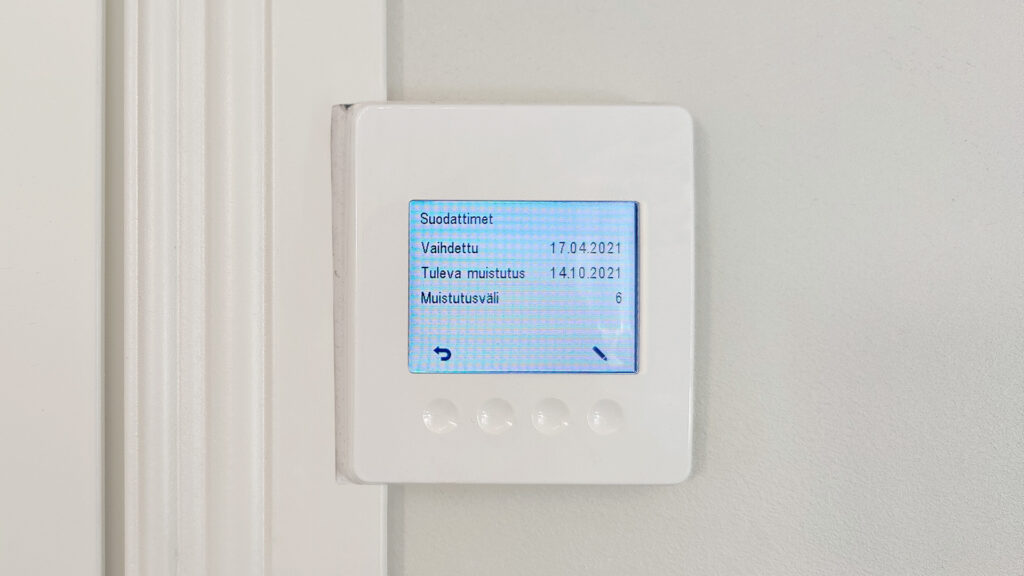
Ventilation maintenance:
- replace or clean the ventilation unit’s filters regularly in accordance with the manufacturer’s instructions
- check the cleanliness and settings of the valves: ventilation valves should be cleaned once a year, but room-specific settings must not be altered
- ensure the ventilation unit is functioning correctly
- at least every ten years, the ventilation ducts must be swept, the ventilation units serviced and the room-specific settings checked.
Effective ventilation prevents moisture damage and supports the longevity of log structures. Replacement air vents must not be blocked, and their unobstructed operation should be checked.
Frequently asked questions about log house maintenance
How often should a log building be maintained?
The most important aspects of log house maintenance are continuous monitoring and preventive maintenance. A visual inspection should be carried out several times a year, and a full annual service at least once a year. In the early years of the building, particularly with traditional log structures, it is worth paying more attention than usual to monitoring settlement.
How long can a log house last if properly maintained?
A log building that is properly designed, constructed and maintained is exceptionally long-lasting. In Finland and elsewhere in Europe, there are log buildings that have been in use for several hundred years. A modern log house, if conscientiously maintained, can remain serviceable for centuries.
How can you tell if a log building is settling too much?
Settlement is usually evident in everyday observations: doors and windows become difficult to open or close, gaps appear in structural joints, or irregularities are noticed in the evenness of the log framework. Settlement itself is a natural phenomenon, but if the changes occur unevenly, rapidly or cause functional problems, it is advisable to have the situation checked by an expert.
Can you adjust the settlement of a log house yourself?
Many log buildings have structural adjustment points, such as adjustable footings or bolts, which can be used to control settlement. Adjustments should be made gradually and in stages, in accordance with the original plans. In cases of uncertainty, it is advisable to consult a structural engineer or another professional with expertise in log construction.
Is the maintenance of a log cabin different from that of a log house?
The maintenance principles are the same regardless of whether the building is a log detached house or a holiday home. The size of the building, its usage rate and the number of technical systems may affect the number of maintenance points, but the requirements for the log structure itself and the items to be inspected are largely the same.
Does non-settling logs reduce the need for maintenance?
Non-settling laminated logs, such as LHX, eliminate the need for monitoring and adjustment related to settling. This makes maintenance particularly easier in the early years of the building’s life. However, other basic aspects of annual maintenance, such as moisture control, the functionality of ventilation and monitoring the condition of surfaces, remain important.
What are the most common maintenance mistakes in log houses?
The most common maintenance mistakes include neglecting rainwater drainage, inadequate maintenance of ventilation, postponing surface treatments for too long, and ignoring signs of settlement during the building’s early years. Most problems can be avoided through regular monitoring and proactive maintenance.
When should you call in a professional to maintain a log house?
Professional assistance is recommended if you notice clear signs of moisture damage in the structures, uneven settling, recurring problems with the operation of doors or windows, or if you are unsure how maintenance measures should be carried out. An expert can help you assess the situation and determine the necessary measures correctly.
This blog post was updated on 3 February 2026.