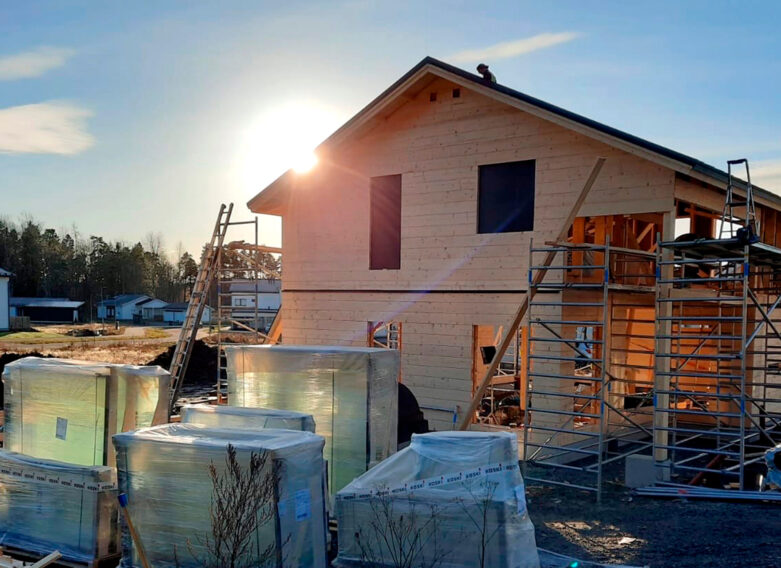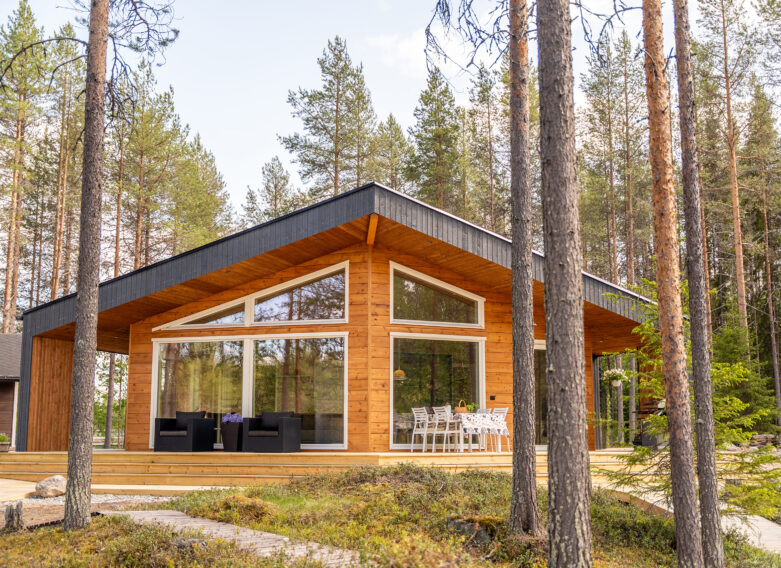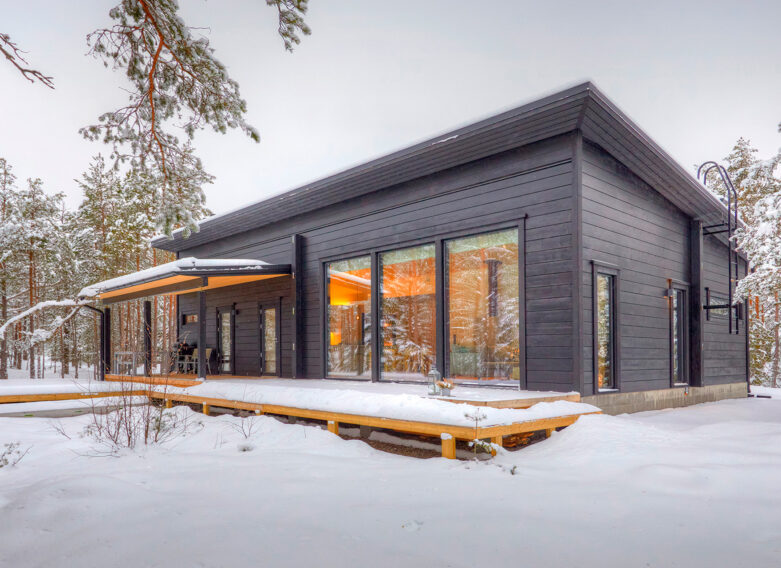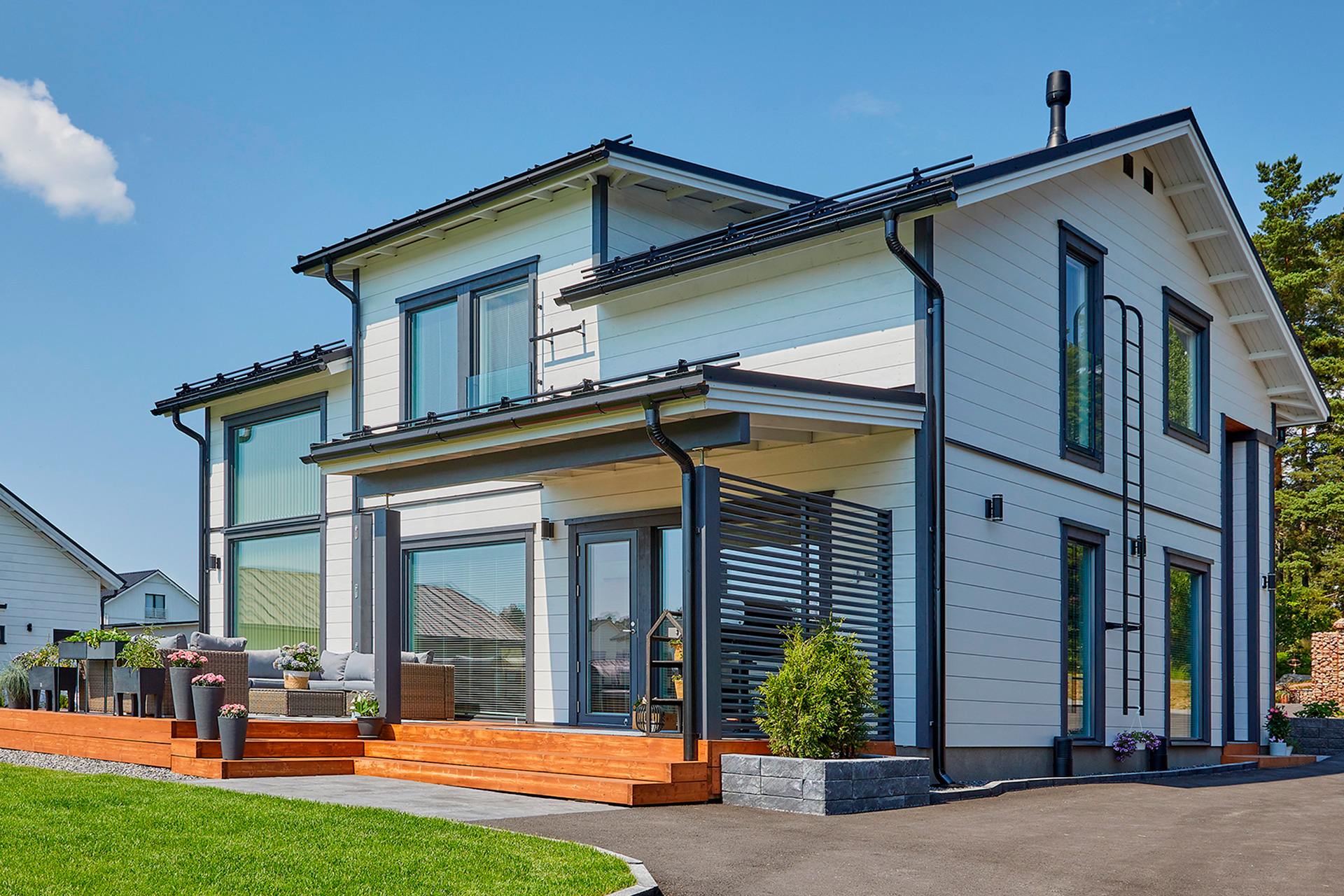
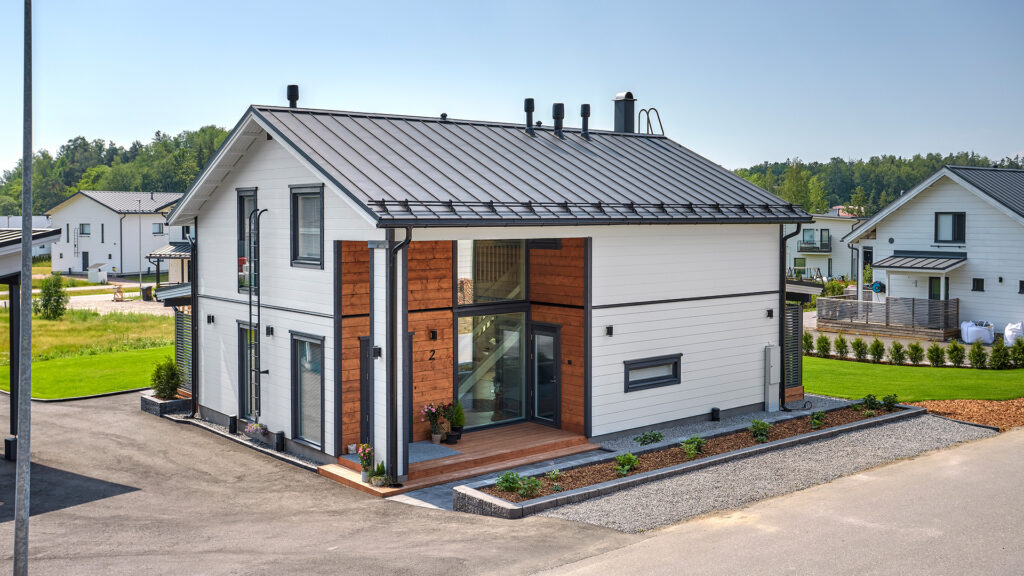
For the couple building Villa Hiisi, log was chosen as the building material for a number of reasons. The log house fitted in with the surroundings and blended in well with the other log houses. The image of a modern log house also created the impression that it would be a good place to live and breathe. Johanna and Henkka have compiled their experiences of living in a log house in this blog post.
The importance of home has certainly grown for all of us over the last couple of years. Home has become a place to live, but for many it has also become a remote workplace, a venue for virtual meetings and a place to have lunch. Grocery shopping may have shifted to home delivery, and the gym to home workouts. The home has thus become a place around which more and more things happen.
Log as a building material
Home has always been very important to us. It has been a place to find peace amidst the hustle and bustle of everyday life. When we found our current neighbourhood and realised from the planning regulations that we could build the house we wanted there, we began to explore the options between timber and log houses.
We already had an image of log as a building material that is breathable, durable and timeless. In addition, we wanted to build a modern, Scandinavian-style home with a sense of space, openness and architectural detail.
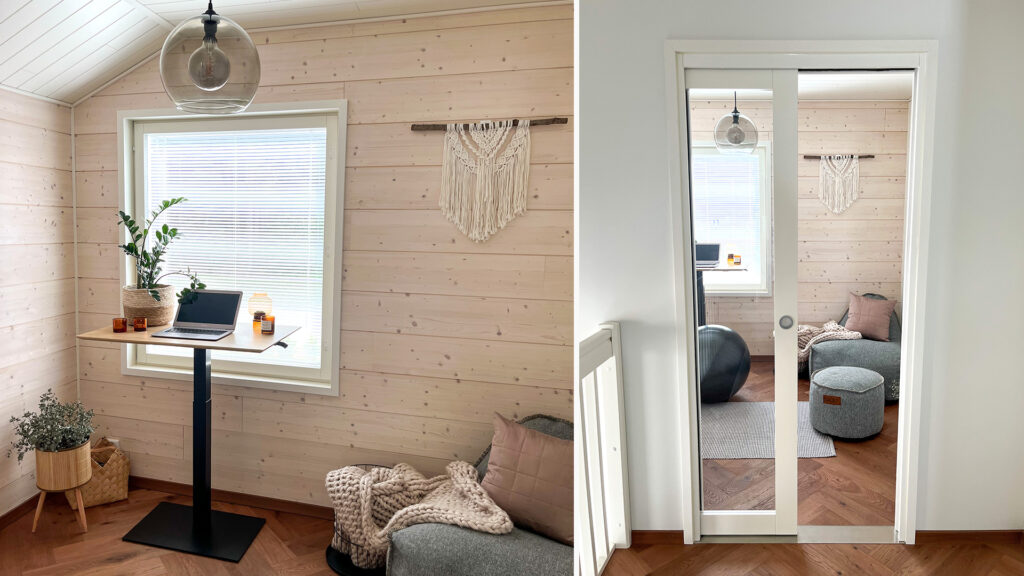
Whilst comparing house designs on the Kuusamo Log Houses website, we found the recently launched Log Home Hiisi model, which met our requirements for a modern log house. With the help of a knowledgeable Kuusamo Representative, we were able to adapt the house collection into a log home that suited our needs and requirements. Inspired by the Hiisi model, we named our home Villa Hiisi, and it can also be found under this name on Instagram @villa_hiisi.
As we familiarised ourselves with log as a building material, we understood where its breathability as a building material comes from. Log, as a single-material building material, means that the interior and exterior walls are made of the same material, with no insulation in between. In this way, log walls balance out fluctuations in air humidity, which is an important factor in terms of indoor air quality. (Source 1.)
Experiences of living in a log house: Good indoor air quality
Sport has always been a passion for both of us, and as a result, good indoor air quality and well-being are key priorities for us. When building a log house, we also wanted to ensure good indoor air quality in our new home. So our home was built by Rakennuspalvelu Tähtinen, a company specialising in log construction, which knew how to take into account the requirements of logs as a building material.
We also carefully checked what types of paints and stains were used on the walls that weren’t left as exposed timber. It was also important to ensure that the screed dried sufficiently well, so that indoor air quality issues wouldn’t arise later from damp concrete.
Log has been found in numerous studies to be allergy-friendly, specifically due to its excellent indoor air quality and antibacterial properties. The air quality in log homes is based on hygroscopicity, i.e. the ability of the wood material to transfer and bind moisture into the wall and, conversely, out of the wall. (Source 2, Source 3.)
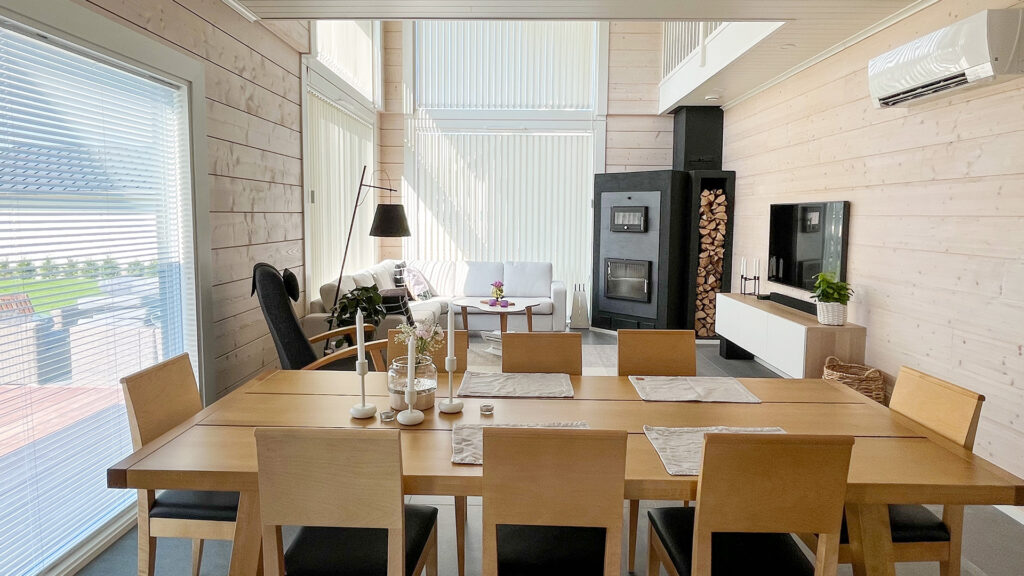
Having lived in a log house throughout the seasons, we have noticed how the logs absorb moisture from the air and slowly release it back, acting as a sort of humidifier. Even in severe frost, the air is not bone-dry, nor is the indoor air heavy or in need of airing after the night.
The aesthetics of timber
As a natural material, timber is a timeless interior design element that also appealed to our aesthetic sensibilities. So we thought that we would hardly ever tire of a timber wall in our interior design and that it would be as if a piece of the forest had been brought into our home.
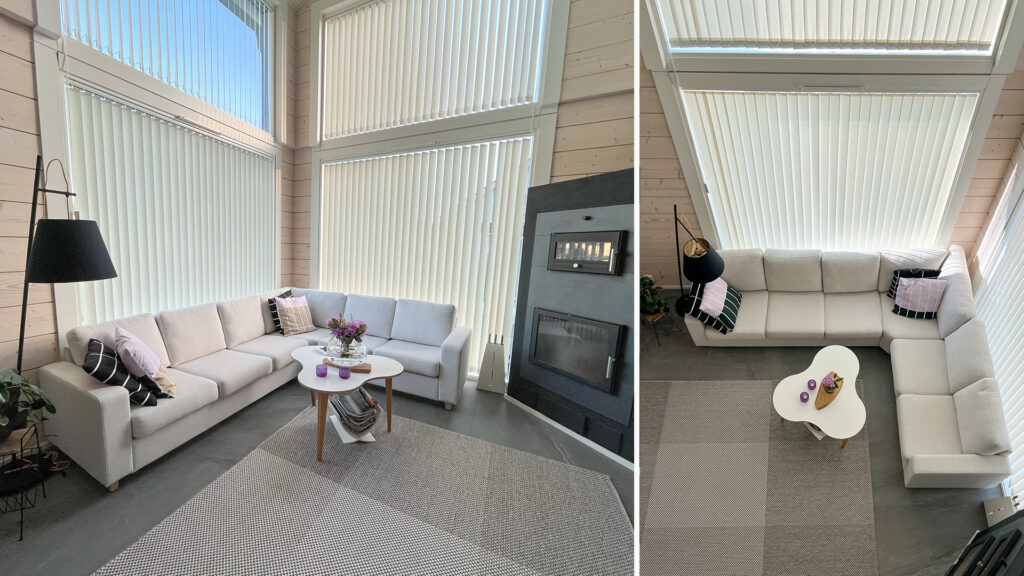
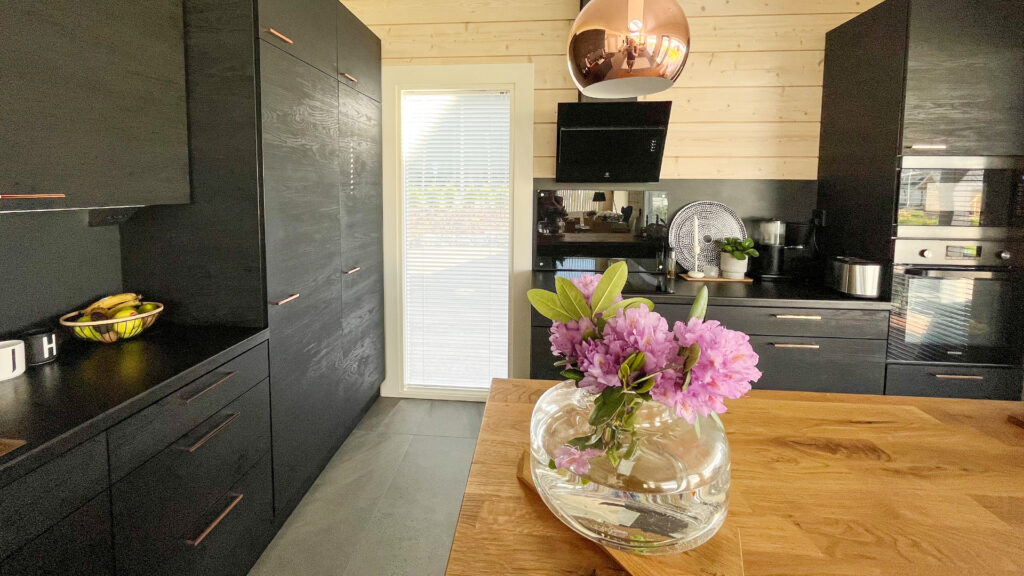
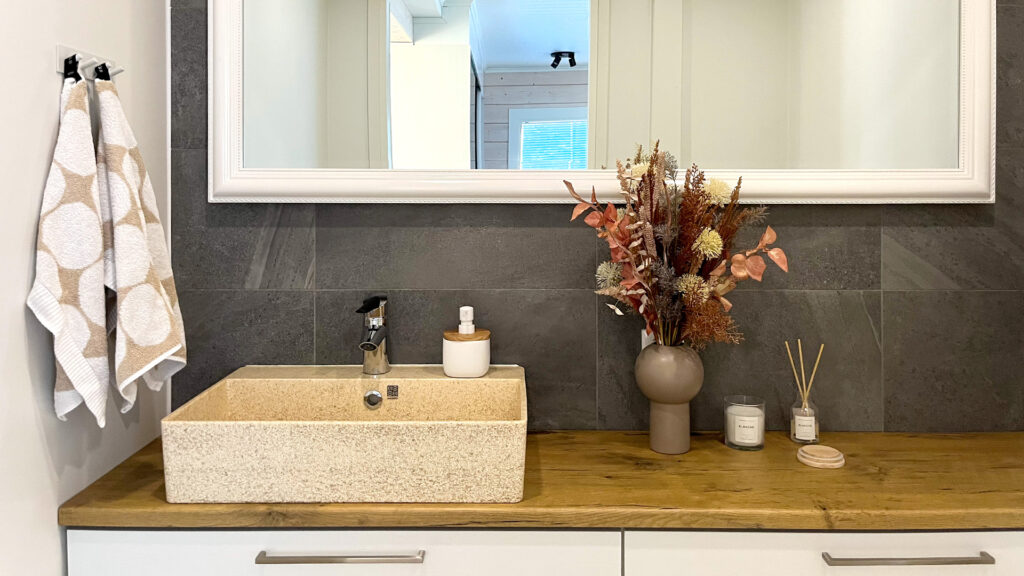
We decided that the log walls would guide our interior design choices throughout the house and that we would leave as much of the log surface visible as possible. We also chose as many natural materials as possible for our other interior finishes. The pine staircase, the oak island, the herringbone parquet made from oak on the upper floor, and the WC basins made from wood composite are just a few examples of how we wanted different wood materials to feature throughout our home.
Studies have also shown that wood has a stress-reducing effect similar to that of nature (source 4). Living in a log house, you can really feel this, as the log walls create a calming and warm atmosphere. The wooden surfaces make the room feel warm and cosy.
A sustainable building material
When we started building in 2020, sustainability wasn’t yet as big a trend as it is today, but timber felt like a sustainable choice as a building material.
The carbon footprint of timber as a building material is small for several reasons. A timber wall sequesters ten times the amount of carbon released during its manufacture, and the sawdust and wood chips produced as by-products during manufacturing generate more energy than is consumed in the production of the timber. (Source 3.)
Furthermore, building a log house requires less energy than quarrying stone, manufacturing bricks and blocks, and constructing a structure more complex than a single-material log wall (source 1).
The fact that the timber comes from Finnish nature, from the highly regarded wood of the north, was also a factor in the decision to build a log house that would withstand Finland’s variable weather conditions.
Quality of life in a log house
After living in a log house for just over a year, I can no longer imagine living anywhere else. Designing and planning our own home has been an inspiring journey to create something of our own. It has been educational and formative. It has taught us to live with things being unfinished, with uncertainty, and by making compromises.
When, just over a year ago, after a two-day move, I stepped into our shower for the first time and looked around at our choices in the quiet twilight of the evening, I realised that we had done this.
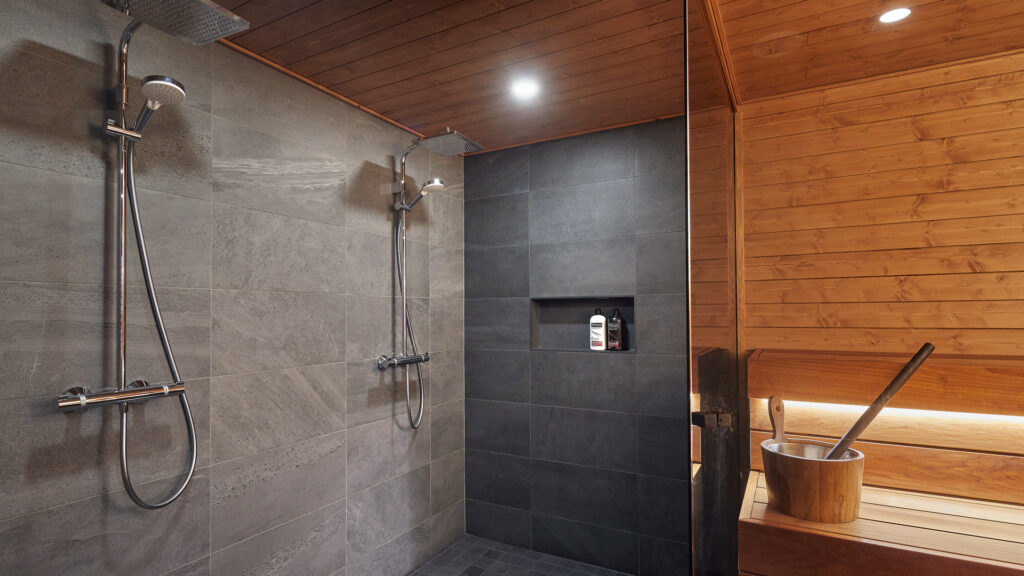
The building work didn’t end with the move; next came building the garage, painting, tiling, asphalting and the garden work to be started based on the garden plan. So there was still a lot of work ahead, but despite that, life in the log house has felt better than we could have hoped for.
Even at the planning stage, we made choices that would support our everyday happiness. We both have our own home offices and plenty of space to work in peace. The utility room and dressing room have enough space to handle the laundry and sportswear. An air source heat pump and blackout curtains ensure that even during the summer heat, our sleep is deep and restorative. The fire in the fireplace brings a sense of calm on darkening autumn evenings.
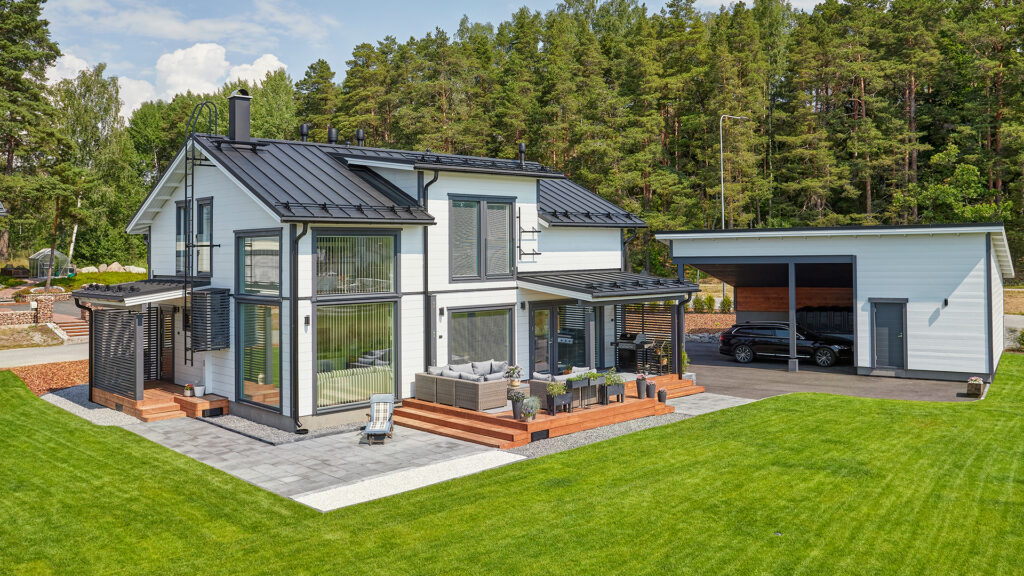
Perhaps the most important realisation about happiness, however, has been that we don’t have to get everything finished this year either. It’s more important to stop and see all the good things around us that we’ve already managed to achieve.
Johanna and Henkka
Sources used in this article:
- Omakoti: The renaissance of log houses
- Puuinfo: The effects of using wood on indoor air quality and health
- Kuusamo Log Houses: Why choose a log house? Read the good reasons
- Online news: Wood reduces stress
Take a closer look at this house:
-
Virtual house showing
-
Guest article
-
Guest article