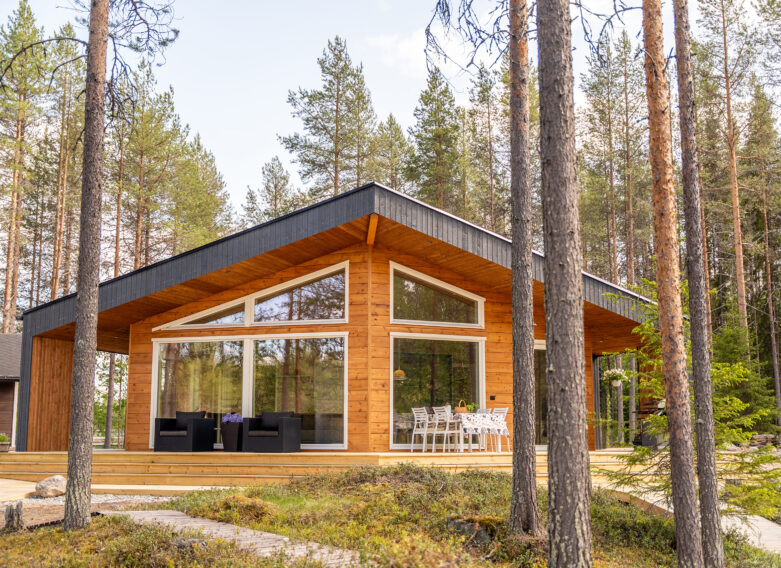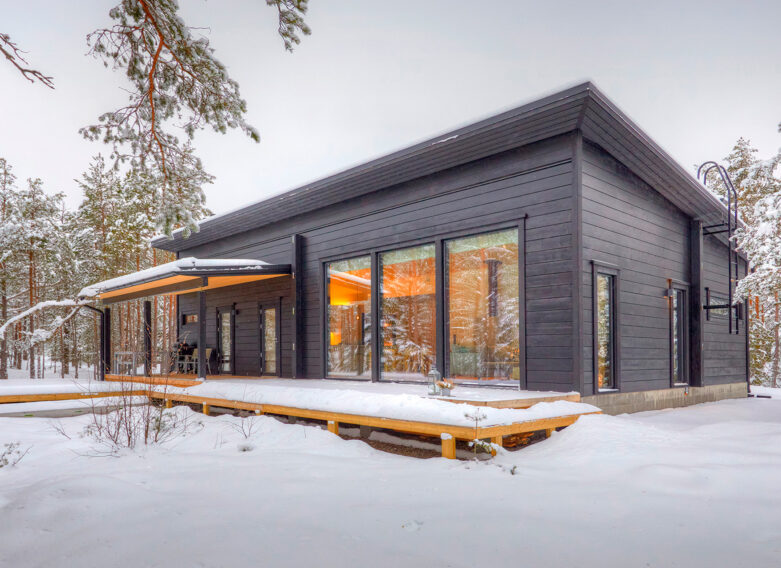
The adhesive used in the high-quality laminated logs used as building materials by Kuusamo Log Houses contains no solvents and does not prevent the wood from breathing.
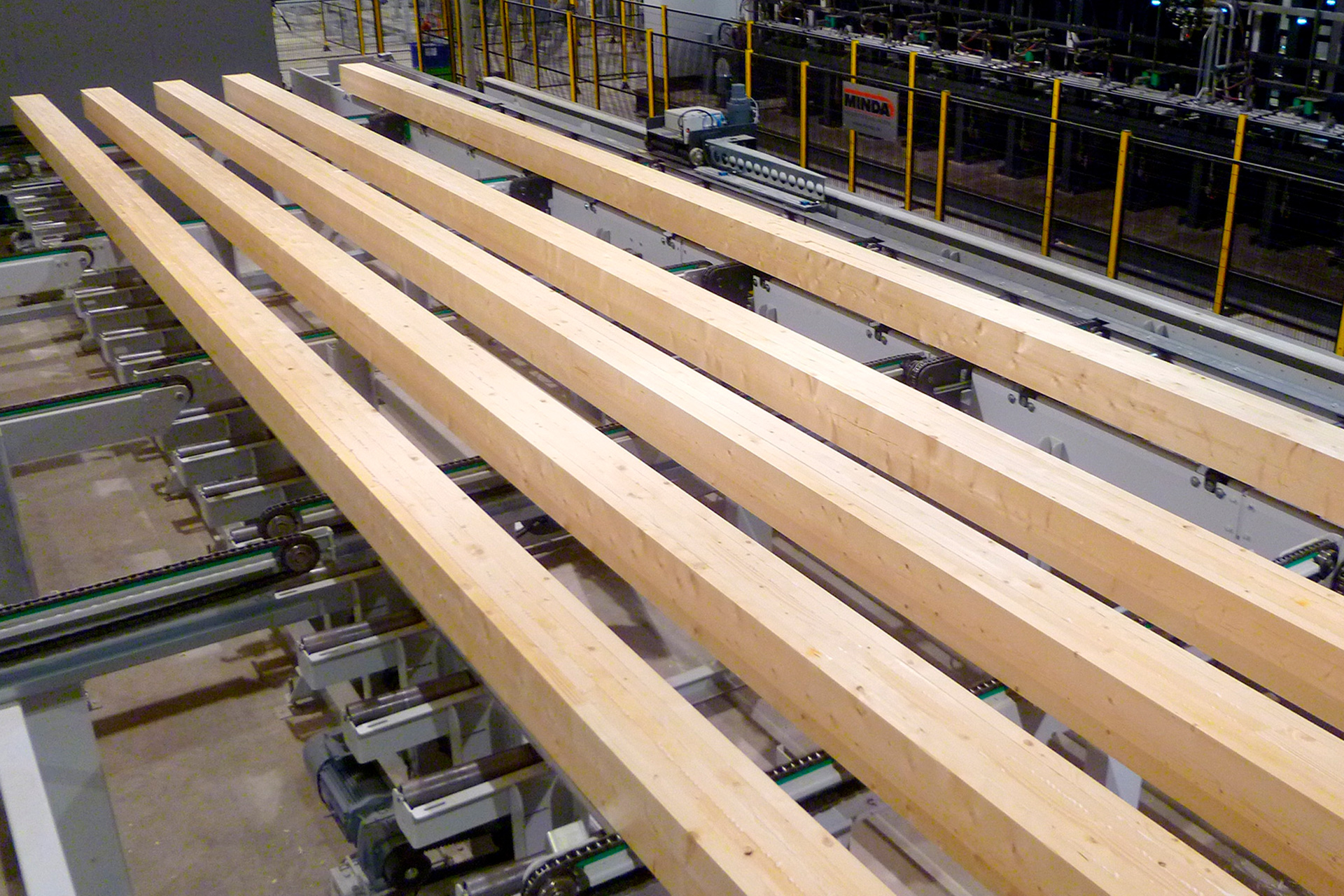
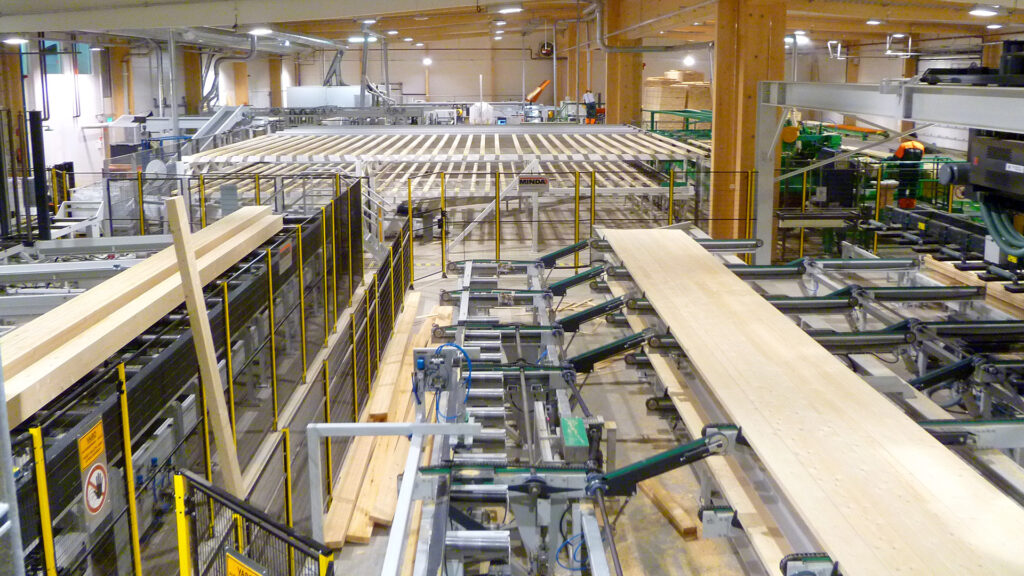
The laminated logs come from the production facility of Pölkky Oy, located next door to Kuusamo Log Houses. Pölkky Oy is Northern Finland’s largest private wood processor, having manufactured laminated logs for some twenty years.
– Our advantage lies in our technical expertise and experience, as we have been involved in wood processing since the 1970s. This long history has also been our trump card in the export market, says Arto Airisniemi, Development Manager at Pölkky Oy.
The solid logs previously used in log houses have now been almost entirely replaced by laminated logs. Laminated logs are made from carefully selected timber, and thanks to a precisely refined manufacturing process, the logs hardly warp or crack at all.
– Wood is a living product, and solid logs retain all the defects, cracks, knots and rot that have developed over the years. During the processing stages of laminated logs, the aim is to minimise these, which is why they have a much more uniform appearance than solid logs. Moisture management is also easier with laminated logs, so yes, they do have many advantages over solid logs, Airisniemi sums up.
Read more about the manufacture of laminated logs and their journey from the forest to Kuusamo Log Houses as a building material!
Log adhesive enhances the beneficial properties of wood
The benefits of log construction and the positive properties and effects of wood, such as on healthy indoor air quality, apply equally to laminated logs as well as solid logs. The amount of adhesive in laminated logs is very small compared to the amount of wood, and therefore has no significant effect on the properties of the wood.
– Wood is always a good insulator and helps regulate humidity. According to studies, the gluing of laminated logs does not adversely affect the properties of the wood, and the adhesives we use allow moisture to pass through just like wood, Airisniemi points out.
Pölkky uses adhesives in the manufacture of laminated logs that preserve the wood’s natural breathability and do not release harmful substances into the indoor air. The single-component polyurethane adhesives used by Pölkky do not contain solvents.
– These carefully tested glues for laminated logs do not release emissions into the indoor air that are harmful to health, emphasises Airisniemi.
The safety of the products is also demonstrated by the fact that ingredients similar to those in polyurethane adhesives are also used, for example, in furniture upholstery and sports footwear.
Read more about our laminated log options!
Tested for healthy indoor air
The manufacture of laminated logs, like other types of glued timber products, is governed by standards set by the EU. Pölkky also carries out its own quality control on each gluing batch in the form of a delamination test. The delamination test, based on visual inspection, ensures the durability and strength of the laminated log’s glue joints under long-term thermal and moisture stresses.
– Samples are taken from each batch of glued timber and subjected to delamination testing. In the delamination test, the glued timber sample is subjected to under- and over-pressure in a pressure vessel filled with water. After this, the sample is placed in a weathering chamber, where it is subjected to extreme conditions equivalent to approximately 40 years of weathering, Airisniemi explains.
The delamination test takes about a day in total, after which the sample is examined under a magnifying glass to assess how the glue joints have held up and behaved. The testing is supervised by the VTT Technical Research Centre of Finland.
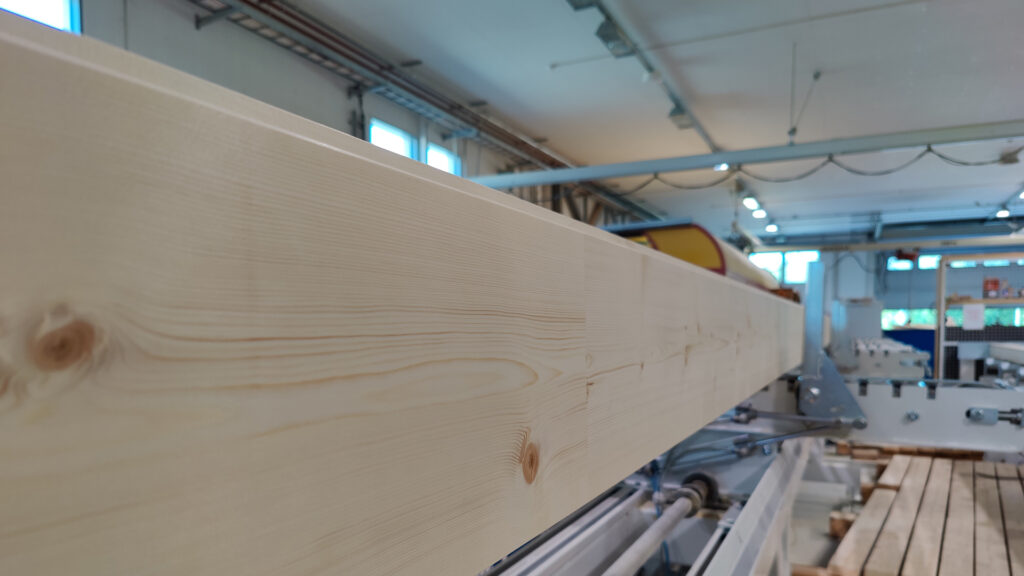
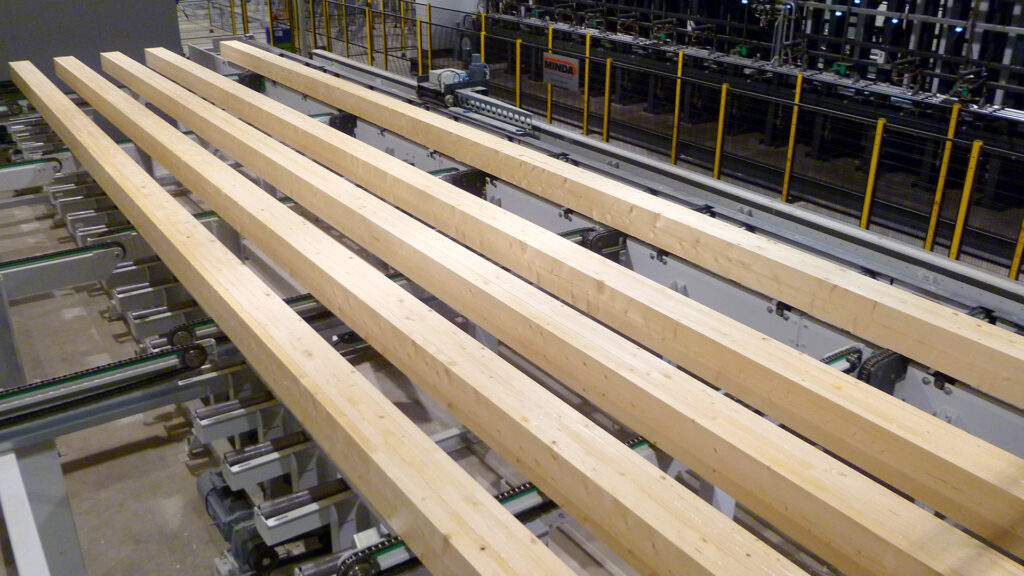
Pölkky does not use high-pressure presses, where the gluing process is accelerated by heating the wood with electricity. The glue used by Pölkky for laminated logs reacts with the air in such a way that, after application, the log must be placed in the press within ten minutes. The log remains in the press for 20 minutes, after which it is ready for planing, profiling and finally delivery of the finished product.
– We have chosen an adhesive for the laminated logs that requires a ten-minute open time and 20 minutes of pressing. So, we are mindful of our carbon footprint here too and do not use electricity to speed up the gluing process, concludes Airisniemi.